
Diabetic Retinopathy
Diabetes currently affects one in ten people worldwide. Understanding diabetic retinopathy is vital to protecting your sight.
What is Diabetic Retinopathy?
Diabetic retinopathy is an eye condition that can cause vision loss and blindness in people who have diabetes. It affects the blood vessels in the retina, the light-sensitive layer of tissue at the back of the eye.
If you have diabetes, it is very important to have a thorough dilated eye examination at least once a year. Diabetic retinopathy may not have any symptoms at first, but finding it early can help you take steps to protect your vision.
Symptoms to Watch For
- Spots or dark strings floating in your vision (floaters)
- Blurred vision
- Fluctuating vision
- Dark or empty areas in your vision
- Vision loss
If you have any of these symptoms, please call us and we can advise you.
What Causes Diabetic Retinopathy?
Diabetic retinopathy is caused by high blood sugar due to diabetes. Over time, having too much sugar in your blood can damage your retina, the part of your eye that detects light and sends signals to your brain through the optic nerve.
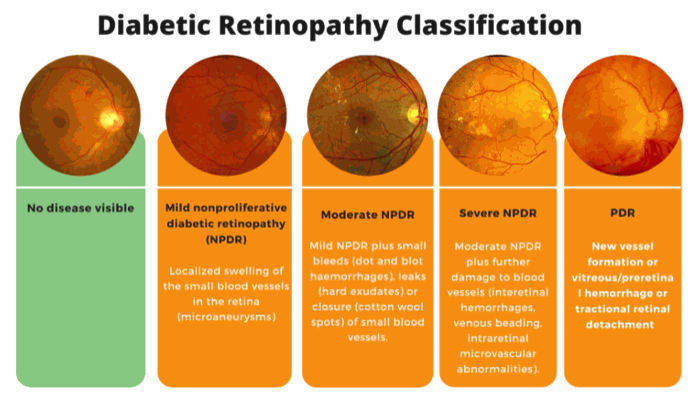
Diabetes damages blood vessels all over the body. The damage to your eyes starts when sugar blocks the tiny blood vessels that go to your retina, causing them to leak fluid or bleed. To make up for these blocked blood vessels, your eyes then grow new blood vessels that do not work well. These new blood vessels can leak or bleed easily.
Related Complications
Diabetic retinopathy can lead to other serious eye conditions:
- Diabetic macular oedema (DME). About 1 in 15 people with diabetes will develop DME over time. It occurs when blood vessels in the retina leak fluid into the macula, the part of the retina needed for sharp central vision, causing blurry vision.
- Neovascular glaucoma. Diabetic retinopathy can cause abnormal blood vessels to grow out of the retina and block fluid from draining out of the eye, leading to a form of glaucoma.
- Retinal detachment. Scars can form in the back of the eye and pull the retina away. This is known as tractional retinal detachment.
Annual checks are essential. Even if your vision feels fine, diabetic retinopathy can develop without obvious symptoms. Regular examination allows us to detect and monitor any changes before they affect your sight.
We use OCT scanning to detect retinal changes at the earliest possible stage.
Book Your Diabetic Eye Check
If you have diabetes, do not wait for symptoms. Book an appointment with our experienced team today.