
Glaucoma
Around 700,000 people in the UK have glaucoma. Over half of them do not know it yet.
What is Glaucoma?
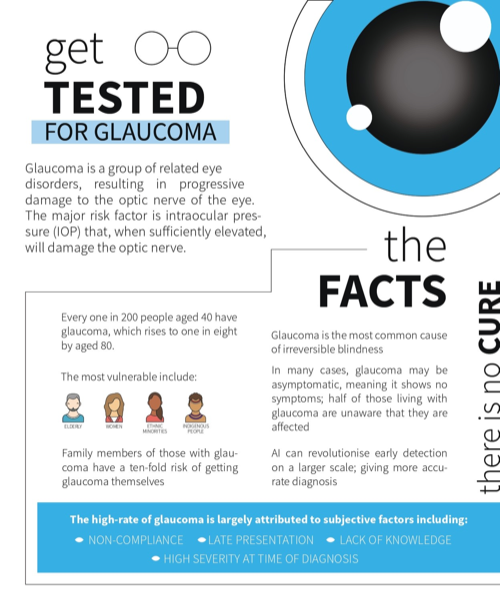
Glaucoma is a group of eye conditions that damage the optic nerve. In most cases this is caused by a build-up of pressure inside the eye, though glaucoma can also develop in eyes with normal pressure.
It is one of the leading causes of blindness worldwide. The critical problem is that it develops slowly and without pain. Vision loss begins at the outer edges of your visual field and moves inward so gradually that most people do not notice it until the condition is already advanced.
Once vision is lost to glaucoma, it cannot be restored. But if caught early, progression can be slowed or stopped, preserving the sight you have.
Over 50% of people with glaucoma are unaware they have it. There are no early warning signs. The only way to detect it is through a thorough eye examination.
Types of Glaucoma
- Primary open-angle glaucoma. The most common type. The drainage channels in the eye gradually become less efficient, causing pressure to build up slowly over many years. No pain, no obvious symptoms.
- Acute angle-closure glaucoma. A sudden blockage of the drainage angle causing a rapid, severe rise in eye pressure. This is a medical emergency: symptoms include sudden eye pain, headache, nausea, blurred vision, and seeing halos around lights.
- Normal tension glaucoma. Optic nerve damage occurs despite eye pressure being within the normal range. The reasons are not fully understood but may involve poor blood supply to the optic nerve.
- Secondary glaucoma. Caused by another eye condition, such as injury, inflammation, or as a complication of cataract surgery.
Acute angle-closure is a medical emergency. If you experience sudden severe eye pain, blurred vision, or see haloes around lights, attend A&E immediately.
Who is at Risk?
Your risk of glaucoma is higher if you:
- Are over 60
- Have a parent, sibling, or child with glaucoma
- Are of African or Caribbean origin (higher risk at younger ages)
- Have raised intraocular pressure (ocular hypertension)
- Are significantly short-sighted (myopic)
- Have diabetes
- Take long-term steroid medication
- Have previously had an eye injury
If you have a close family member with glaucoma, you are entitled to a free NHS eye test regardless of your age.
NHS Entitlement
You qualify for a free NHS sight test if:
- You have been diagnosed with glaucoma
- You are aged 40 or over and a parent, sibling, or child has glaucoma
- An ophthalmologist has advised you are at risk of glaucoma
Not sure if you qualify? Check your NHS eligibility or call us on 01277 212978.
How We Check for Glaucoma
Glaucoma cannot be diagnosed from a single test. We use a combination of checks during your eye examination:
- Intraocular pressure measurement. Checks the pressure inside the eye using a non-contact tonometer.
- Visual field testing. Maps your peripheral vision to detect any areas of loss.
- Optic nerve examination. We examine the optic nerve head directly for signs of damage or cupping.
- Fundus photography. A photograph of the back of your eye for baseline comparison at future appointments.
- OCT scanning. Produces a detailed cross-section of the optic nerve and retinal nerve fibre layer, detecting glaucomatous changes before any vision loss occurs.
OCT scanning is particularly valuable for glaucoma monitoring. It can detect thinning of the nerve fibre layer years before it becomes visible on a standard examination, giving us the earliest possible warning.
Treatment
Glaucoma cannot be reversed, but it can be controlled. The goal of treatment is to lower intraocular pressure and prevent further damage to the optic nerve.
- Eye drops. The most common first-line treatment. Various types work by reducing fluid production in the eye or improving drainage.
- Laser treatment. Used to improve drainage from the eye. Usually performed in a hospital eye clinic.
- Surgery. If drops and laser are not sufficient, surgical procedures can create a new drainage channel.
If we detect signs of glaucoma or raised pressure at your examination, we will refer you to an ophthalmologist at the appropriate level of urgency. We work closely with local hospital eye departments and can fast-track referrals when needed.
Early detection saves sight. The earlier glaucoma is found, the more vision can be preserved. A routine eye test is the single most effective thing you can do to protect yourself.
Frequently Asked Questions
What are the symptoms of glaucoma?
In most cases, early glaucoma has no symptoms at all. Vision loss begins at the edges of your visual field and progresses inward so gradually that it often goes unnoticed until the condition is advanced. Regular eye tests are the only reliable way to detect it.
Am I entitled to a free NHS eye test because of glaucoma?
Yes. You are entitled to a free NHS sight test if you have been diagnosed with glaucoma, if you are aged 40 or over and a parent, sibling, or child has been diagnosed with glaucoma, or if an ophthalmologist has told you that you are at risk of glaucoma.
How often should I have an eye test if I have glaucoma?
If you have glaucoma or are being monitored for raised pressure, your optometrist or ophthalmologist will advise on the appropriate interval, typically every six to twelve months. Do not wait two years between tests if you are in a higher-risk group.
Can glaucoma be cured?
No. Glaucoma cannot be reversed or cured. Damage to the optic nerve is permanent. With treatment, progression can be slowed significantly or stopped entirely. Catching it early, before significant damage has occurred, makes all the difference.
Does glaucoma run in families?
Yes. Having a first-degree relative (parent, sibling, or child) with glaucoma significantly increases your risk. If this applies to you, you should have regular eye tests from the age of 40, and you are entitled to have them free on the NHS.
Book a Glaucoma Check
If you are over 40, have a family history of glaucoma, or have not had an eye test in the past two years, book an appointment today.